


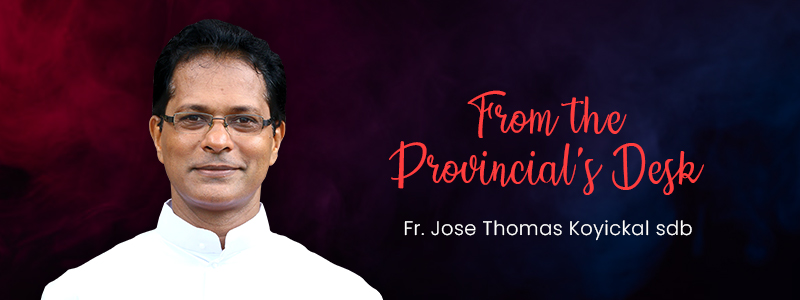
WORLD DAY OF PEACE: EMBRACING AN “UNARMED AND DISARMING” VISION
On January 1st each year, the Catholic Church celebrates the World Day of Peace, a tradition
established to invoke God’s blessing upon the new year and to call humanity to reflect on the
sacred gift of peace. The 2026 observance carries particular urgency, as Pope Leo XIV has
chosen the theme “Peace be with you: Toward an ‘Unarmed and Disarming’ Peace” (Pace sia
con voi: Verso una pace ‘disarmata e disarmante’). This powerful message arrives at a moment
when our world desperately needs it: when conflicts rage across continents, when terrorism
shatters innocent lives, and when military spending reaches unprecedented levels. The Pope’s
vision challenges us to imagine peace not as the mere absence of war, but as an active,
transformative force that changes hearts and dismantles the structures of violence.
The Global Landscape of Conflict and Violence
To understand the significance of Pope Leo’s message, we must first honestly confront the
suffering that pervades our world. Recent years have witnessed high-intensity conflicts on a
scale unseen for decades. As we entered 2025, the wars in Ukraine, Gaza, and Sudan entered
their third or fourth year, with peace negotiations proving frustratingly unsuccessful. Beyond
these well-publicized conflicts, civil war continues in Myanmar, insurgencies persist across
Sub-Saharan Africa, fighting rages in the Eastern Democratic Republic of the Congo, and the
broader Middle East crisis has dangerously expanded, including the recent conflict that erupted
between India and Pakistan in May.
Terrorism has also shattered peace and tranquillity throughout 2025. The year began with the
horrific attack in New York, where a man drove a vehicle into a New Year celebration party
killing fourteen and injuring fifty-seven. Several others followed during the year such as:
seventy-three killed in a mass shooting in Mali on 7 February; more than seventy beheaded in
the Democratic Republic of Congo on 12 February; fifty-nine killed in Balochistan through
mass shooting, bombings, hostage taking, and derailment on 11 March; over sixty slain in
Burkina Faso through looting, arson, and shooting on 28 March; ninety-five murdered in
shootout and assault in Niger on 19 June; more than thirty were killed in a suicide bombing in
Damascus on 22 June; about fifty killed in the Democratic Republic of Congo on 27 July
through mass shooting, stabbing, arson, and kidnapping; fifty died in Nigeria on 19 August;
and the recent terrorist attack on the Bondi Beach in Australia that left fifteen killed and fortytwo injured on 14 December. We know how India too suffered grievously from terrorism in
2025. On 22 April, militants opened fire on tourists in a meadow in Pahalgam, Jammu and
Kashmir, killing twenty-six and injuring twenty. Later, on 10 November, a car bombing in New
Delhi claimed fifteen lives and left twenty more injured.
The human toll of these conflicts and tragedies is staggering and must never be reduced to mere
statistics. Hundreds of thousands have been directly killed. Behind each number stands a
person: someone’s child, parent, sibling, or friend. Millions more have been injured, displaced,
orphaned, starved, abused, and traumatized. In some regions, the destruction is so severe that
recovery may never be complete.
As Pope Leo XIV reminds us, “We should not overlook those people who are suffering.” Their
suffering is our suffering. These tragedies reveal that peace is not an abstraction but something profoundly concrete that we must earnestly seek and work for: children safe in their schools,
families sleeping without fear, communities celebrating differences rather than fearing them,
and a world where the vulnerable are protected rather than exploited.
Sadly, the response to this violence has often been more violence. Global military expenditure
increased by 9.4% in 2024 compared to the previous year, continuing a decade-long trend and
reaching a staggering $2,718 billion, representing 2.5% of global GDP. Pope Francis has aptly
described our current situation as “a third world war fought piecemeal.” This escalating
militarization raises a fundamental question: Is military operation and war truly a solution to
terrorism and conflict? The evidence suggests otherwise. As confrontational logic dominates
global politics, instability and unpredictability deepen day by day.
Understanding “Unarmed and Disarming” Peace
Into this landscape of violence and fear, Pope Leo XIV offers a radically different vision. His
message begins with the familiar liturgical greeting: “Peace be with you” (Pax vobiscum).
These are the words the Risen Christ spoke to his frightened disciples, and they became the
ancient greeting Christians used thereafter. The Pope emphasizes, however, that Christ’s words
do more than merely wish for peace: they “truly bring about a lasting transformation in those
who receive it, and consequently in all of reality.”
What does it mean for peace to be “unarmed” (disarmata)? An unarmed peace is one that does
not rely on weapons, military might, or the threat of violence. It is peace built on justice,
dialogue, and mutual respect rather than on fear and force. In a world which assumes that peace
can only be maintained through strength and aggression, this vision seems impossibly naïve.
Yet as the Pope reminds us, “Goodness is disarming. Perhaps this is why God became a child.”
No one can change us so profoundly as a child; perhaps it is precisely the fragility of children
that can soften and transform our hearts.
Being “unarmed” means rejecting the logic that superiority comes from being armed, that
power flows from the barrel of a gun. It symbolizes a conscious choice to lay down the weapons
of aggression, violence, and domination. It is the realization that military aggression, especially
nuclear, is rooted in irrationality, built not on law, justice, and trust, but on fear and domination
by force. It recalls the words of Jesus to Peter in the Garden of Gethsemane: “Put your sword
back into its sheath” (John 18:11; cf. Mathew 26:52).
What, then, does it mean for peace to be disarming? A disarming peace is one that melts hearts,
breaks down barriers, and transforms enemies into friends. It is the peace of the Risen Christ,
who appeared to His frightened disciples and said simply, “Peace be with you” (John 20:19).
To disarm means literally to remove arms from society, creating communities characterized by
safety rather than threat. It also means something deeper: removing distrust and hostility from
human relationships. Positively, it connotes being welcoming and caring: peace that attracts
rather than coerces, that invites rather than demands.
The Foundation: Dialogue Between Religions
The Swiss theologian Hans Küng stated: “There will be no world peace without peace between
religions, and no peace between religions without dialogue between religions.” These words resonate with even greater urgency today, sixty years after the promulgation of Nostra Aetate,
the Second Vatican Council’s ground-breaking declaration on the Church’s relationship with
non-Christian religions. On 18-19 November 2025, scholars and religious leaders gathered at
the University of Santa Croce in Rome for a symposium marking this anniversary, reflecting
on how far we have come and how far we still must go.
Nostra Aetate opened doors of dialogue that had been closed for centuries. It declared that “the
Catholic Church rejects nothing that is true and holy” in other religions, calling Catholics to
“acknowledge, preserve and promote the good things, spiritual and moral, as well as the sociocultural values found among people of other religions.” This revolutionary document laid the
theological foundation for interreligious dialogue as an essential path to peace.
Pope Leo XIV builds on this foundation with his own urgent appeal: “An essential service that
religions must render to a suffering humanity is to guard against the growing temptation to
weaponize even thoughts and words.” The great spiritual traditions, as well as right reason,
teach us to look beyond blood ties or ethnicity, beyond associations that accept only those who
are similar and reject those who are different. Yet today, this cannot be taken for granted. It has
become increasingly common to drag the language of faith into political battles, to bless
nationalism, and to justify violence and armed struggle in the name of religion.
Believers must actively refute these forms of blasphemy that profane the holy name of God,
above all by the witness of their lives. Therefore, alongside action, it is more necessary than
ever to cultivate prayer, spirituality, and ecumenical and interreligious dialogue as paths of
peace and languages of encounter within traditions and cultures. Throughout the world, every
community should become a “house of peace,” a place where hostility is defused through
dialogue, where justice is practiced, and forgiveness is cherished. Now more than ever, we
must show that peace is not an utopia, but a living reality, by fostering attentive and life-giving
pastoral creativity.
Salesians: Called to be Agents of Peace in Today’s World
It is important that all people of goodwill carry forward this vision of inclusion, tolerance, and
concern for one another. As Salesians, we are particularly suited to the work of dialogue and
peace-making. Don Bosco himself welcomed young people of every background into his
oratories. His Preventive System is, at its core, a method of dialogue, reaching young hearts
through reason, religion, and loving-kindness. Today, we must extend that same spirit of
openness to interreligious encounter, recognizing that building peace among religions begins
with genuine, respectful conversation. This requires becoming persons of peace in our various
settings:
Peace in Our Communities: Peace begins at home, more specifically, within our Salesian
communities. We must ask ourselves whether we are true models of fraternal charity and
whether we take care to resolve conflicts through dialogue. We must ensure that our
communities are places where every person feels valued and heard. Let us not forget that our
young people are watching us. They learn peace not so much from our words as from
witnessing how we live and work together. A community that prays together, shares meals
together, and contributes collectively to the common mission is the greatest witness of peace
we can offer to our youth.
Peace Through Education: Our schools, colleges, youth centers, and oratories must become
laboratories of peace. We must teach young people to dialogue across differences rather than
demonize those who are different; to resolve conflicts non-violently through communication
and negotiation; to recognize the dignity of every person regardless of religion, ethnicity, or
background; to think critically about the narratives of violence and division that saturate social
media and news; and to become agents of reconciliation in their own settings. It is important
that they embody the principle engraved at the entrance of our Parliament building:
“Vasudhaiva Kutumbakam” (the world is one family).
Peace Through Advocacy: We cannot remain silent in the face of injustice. It is important to
speak out against violence wherever it affects our brothers and sisters. We are called to
champion policies that protect the vulnerable, especially children and youth. We must
challenge systems and structures that perpetuate poverty, inequality, and conflict, and use our
voice, both locally and nationally, to promote nonviolent solutions to disputes.
Peace Through Prayer: Finally, we are called to be people of prayer. We pray for victims of
violence everywhere. We pray for world leaders, that they may choose dialogue over war. And
we pray for ourselves, that we may have the courage and creativity to be authentic
peacemakers. Even when peace is endangered within us and around us, like a small flame
threatened by a storm, we must strive to protect it, never forgetting the names and stories of
those who have borne witness to it. Just as on the evening of Easter Jesus entered the place
where His disciples were gathered in fear and discouragement, so too the peace of the Risen
Christ continues to pass through doors and barriers in the voices and faces of His witnesses.
Peacemakers resist the spread of darkness, standing as sentinels in the night.
We also seek the intercession of Mary, Mother of God and Help of Christians, for she is the
Queen of Peace. To her we entrust all our efforts for peace.
Wish you, dear confreres, a very happy and serene New Year 2026.
Yours affectionately in Don Bosco,
Fr Jose Thomas Koyickal SDB
Provincial
Province News

Recent Message
-
LENT: A JOUR...
23 March 2026 -
WORLD DAY OF...
23 March 2026 -
PREPARING FO...
01 December 2025 -
ON HUMAN DES...
21 November 2025 -
ST. CARLO AC...
21 October 2025 -
MISSION: THE...
21 September 2025 -
WITH MARY AS...
21 August 2025 -
LIVING A SPI...
02 July 2025 -
THE RESURREC...
29 April 2025 -
LENT: A JOUR...
29 March 2025
