80th Year of India’s Independence and 75th Year of the Indian Constitution
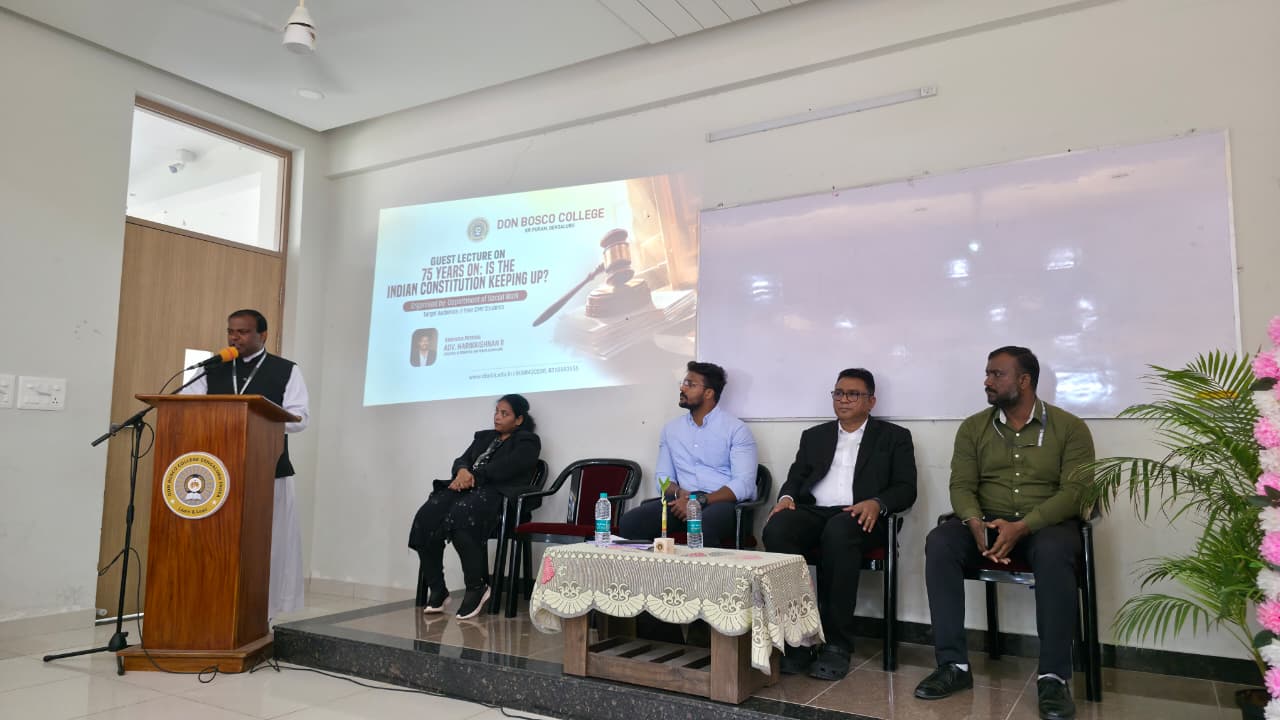
As India commemorates two significant milestones – the 80th Year of Independence and the 75th Year of the Indian Constitution, the Department of Social Work, Don Bosco College, KR Puram, Bengaluru, in collaboration with other Departments, organised a seminar on the Relevance of the Indian Constitution in Contemporary Society. The programme aimed to deepen students’ understanding of the Constitution and inspire them to uphold democratic values, human rights and social justice, while fostering a deeper sense of responsible citizenship and patriotism.
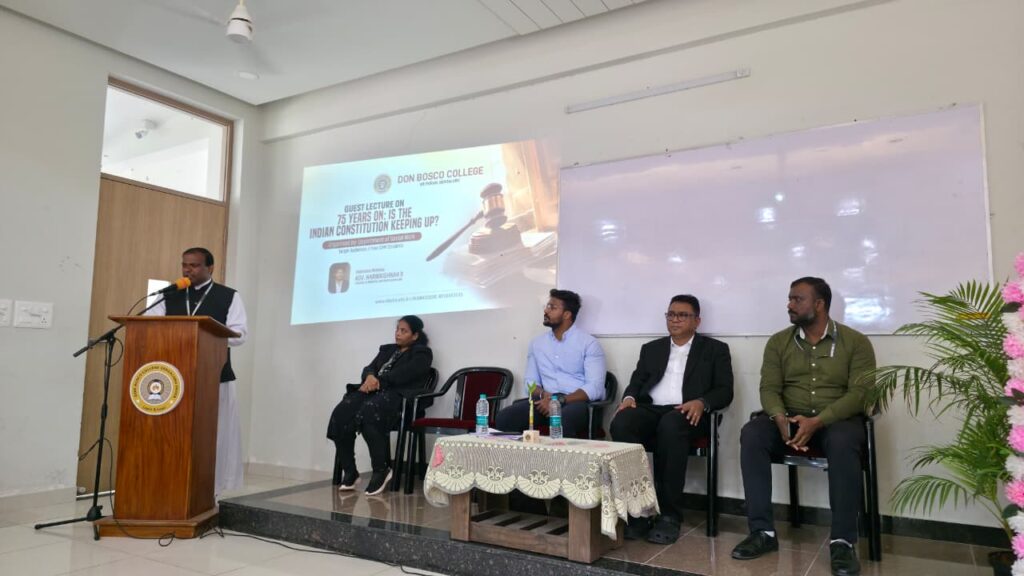
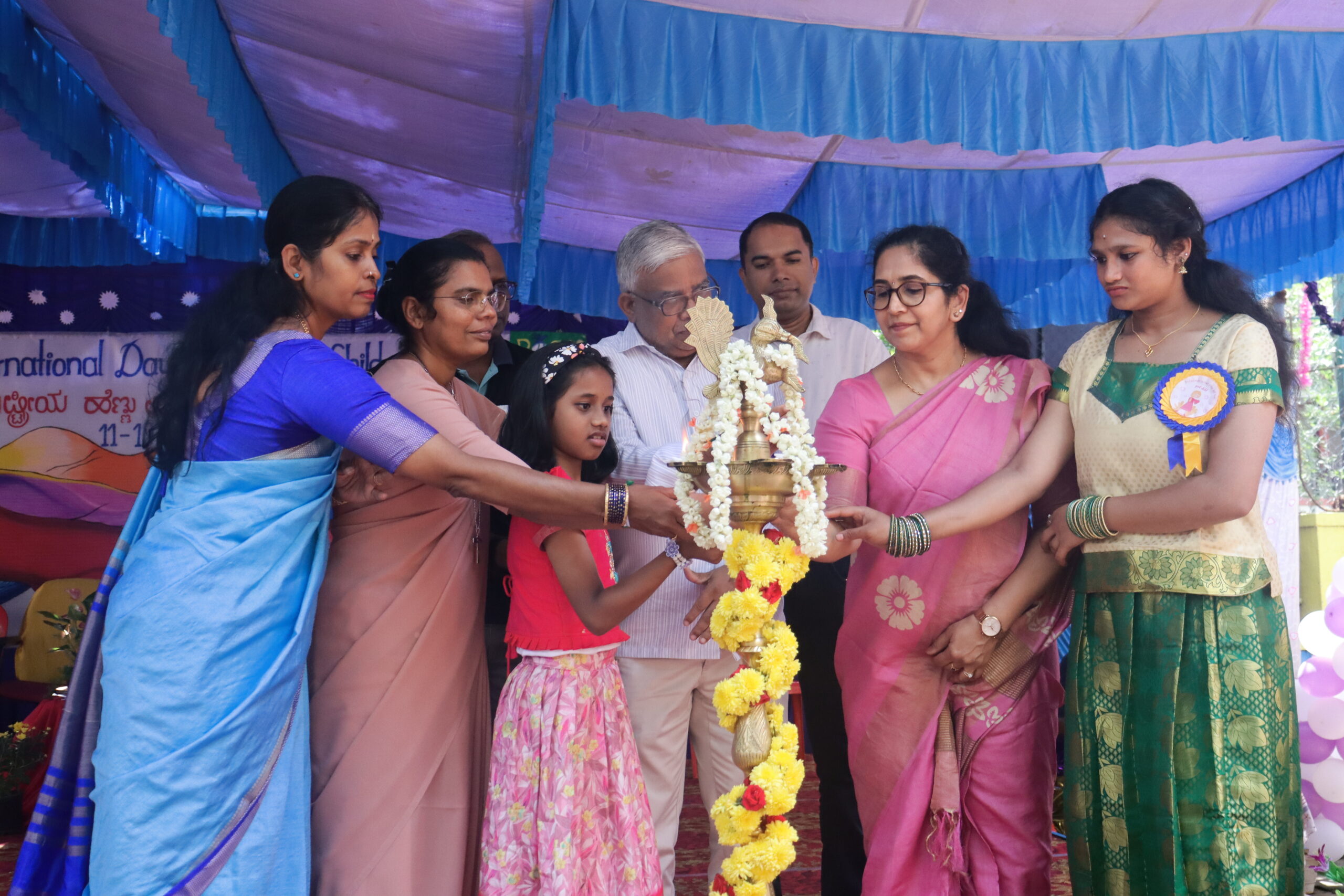
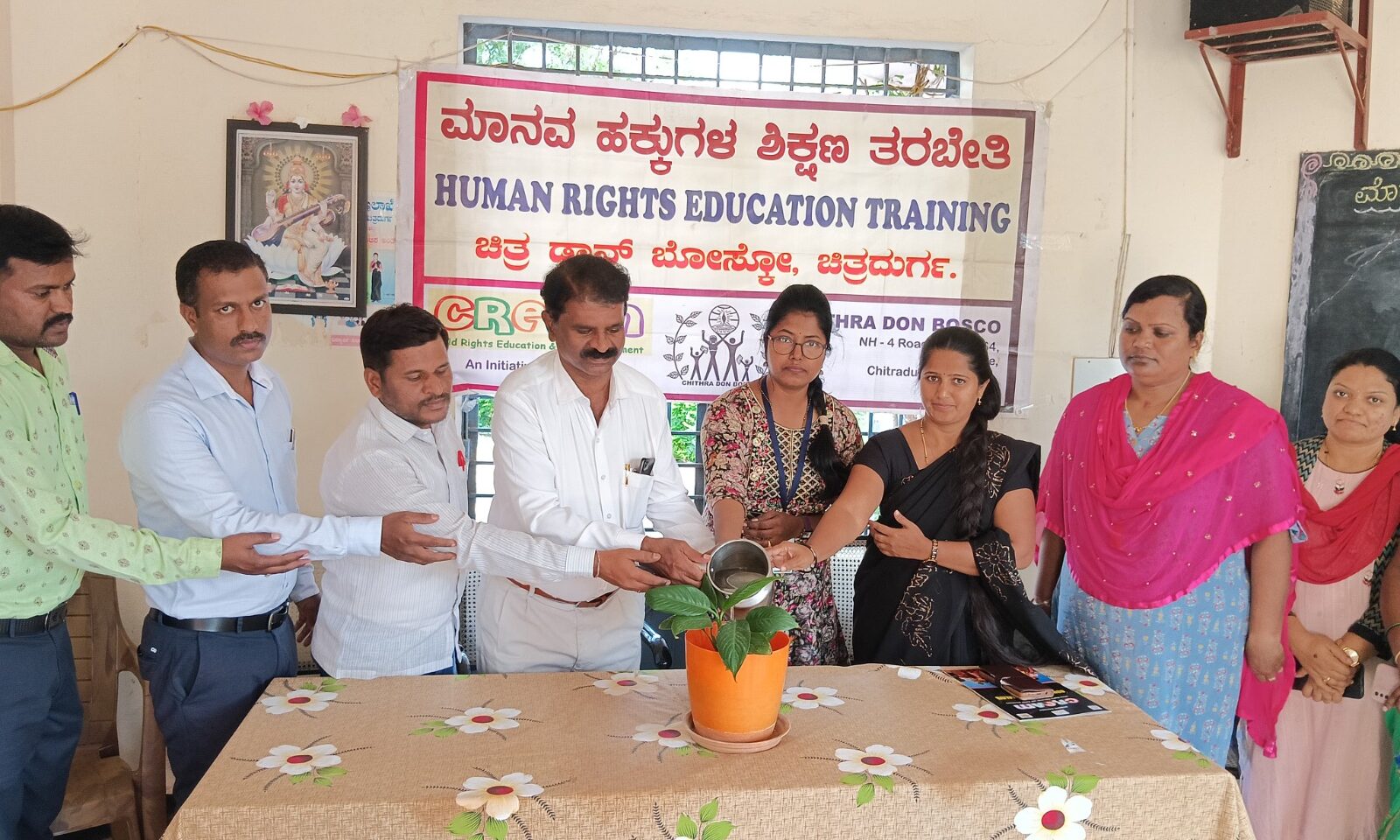
The inaugural session was presided over by Rev. Fr. Dr. Geo Kalladanthiyil, Principal, in the presence of Rev. Fr. Dr. George P.S., BISS Director, and Mr. Vinod Kumar, Vice Principal. The resource person for the seminar was Mr. Harikrishnan, Advocate, Alternative Law Forum, Bengaluru.
While India’s freedom struggle was primarily a struggle for political independence, the seminar encouraged students to reflect on a deeper question: Is freedom and dignity equally experienced by all sections of society? Issues such as gender inequality, untouchability, caste discrimination, corruption, child labour and violations of human rights continue to affect sections of society even decades after Independence. Students were also encouraged to reflect on the importance of democratic freedoms, including the freedom to question, dissent and participate meaningfully in public life.
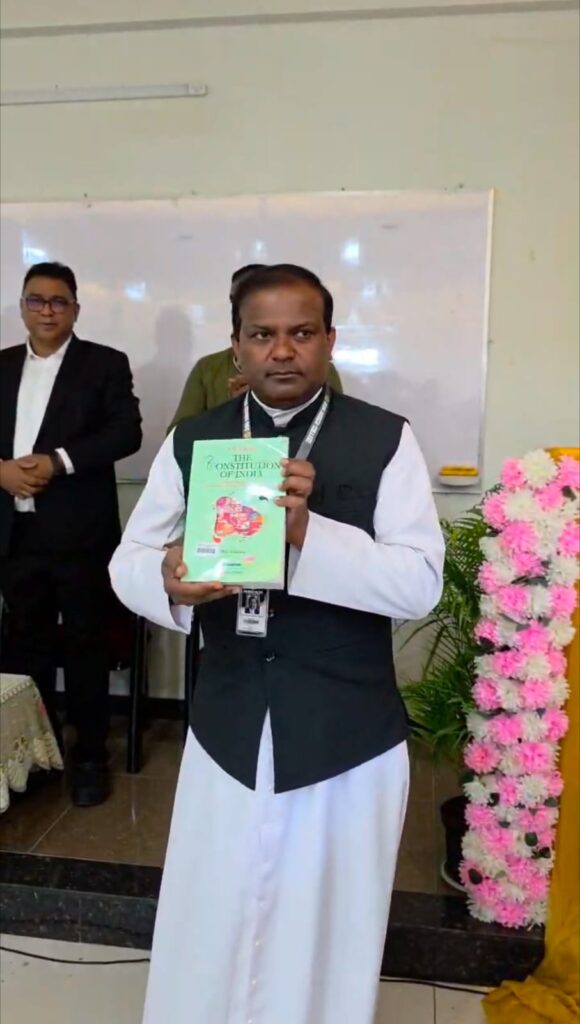
Rev. Fr. Dr. George P.S. welcomed the gathering and highlighted the importance of understanding the Constitution. Describing it as a ‘great book, next only to the spiritual books’ followed by people of different faiths, he emphasized that knowledge of the Constitution and its practical application could bring about meaningful transformation in society. He urged students to become “agents of social change” by understanding their rights and responsibilities as citizens.
Rev. Fr. Dr. Geo Kalladanthiyil, in his address, emphasised the continuing relevance of the Constitution for young people and encouraged students to imbibe and practise the values and principles enshrined in it. Mr. Vinod Kumar, Vice Principal, referred to Dr. B.R. Ambedkar’s autobiographical work, Waiting for a Visa, and encouraged students to read the memoirs and writings of great personalities who contributed immensely to the transformation of Indian society.
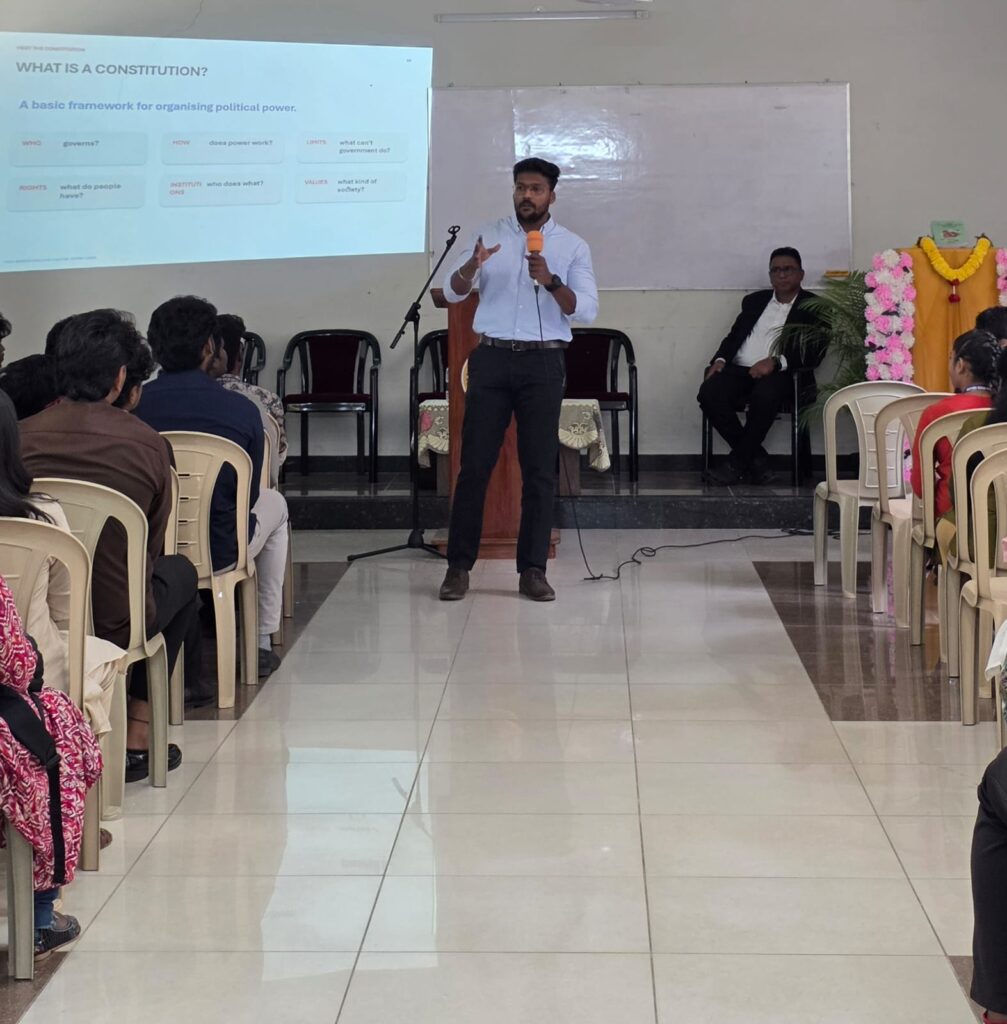
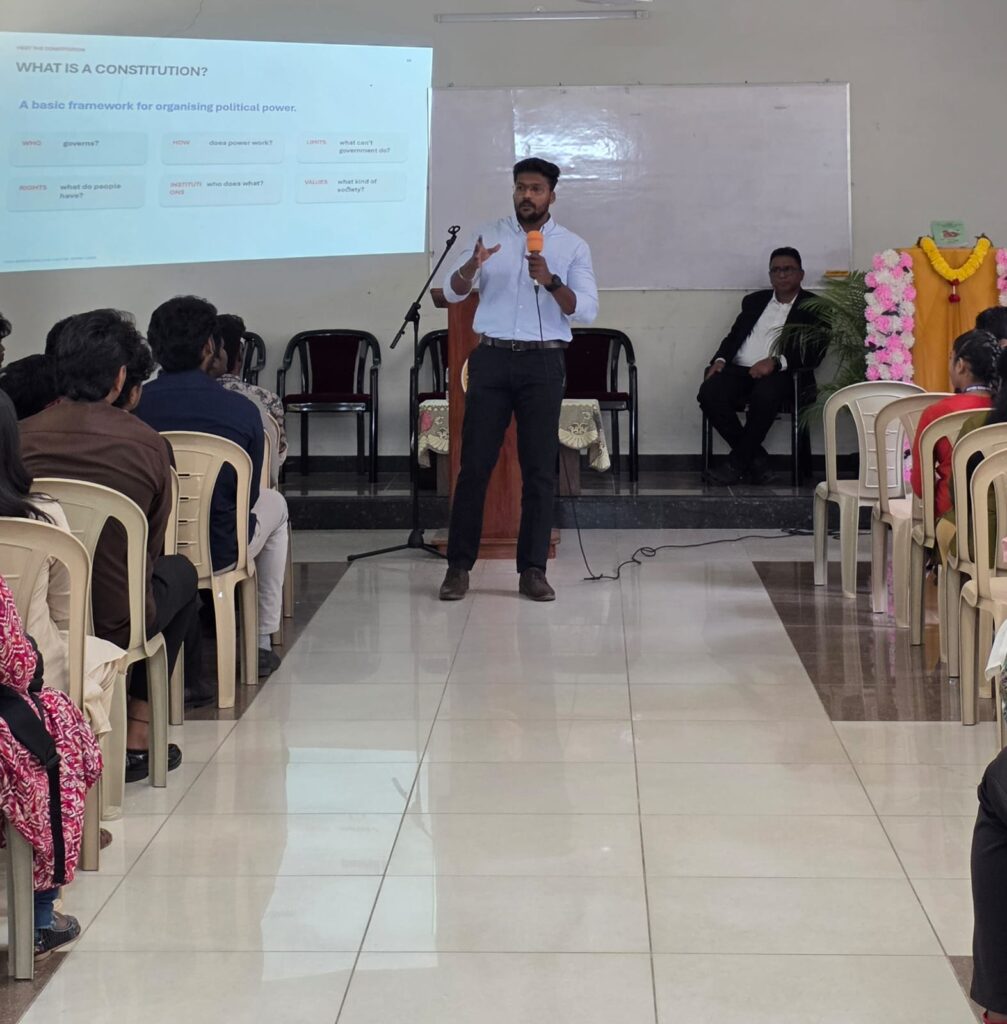
The second part of the programme was led by the resource person, Mr. Harikrishnan, who adopted an interactive and participatory approach to help students understand the significance and contemporary relevance of the Constitution. He began by posing thought-provoking questions: “What is freedom for us? Do we really have it? How does it feel when our freedom is taken away from us?” The questions generated enthusiastic responses from the students and revealed their desire to live in a nation that upholds the values enshrined in the Constitution.
Mr. Harikrishnan also explained the process of drafting the Indian Constitution and highlighted how people with diverse ideologies, experiences and perspectives came together to create a constitutional framework for an independent India. He explained the significance of constitutional rights and engaged the students with questions on various Articles of the Constitution and their role in protecting citizens. He observed that although the Constitution was carefully and thoughtfully framed, several laws and constitutional provisions are yet to be effectively implemented. He also encouraged students to make meaningful use of their time rather than spending it excessively on social media, reels and endless scrolling, and urged them to work towards building a more “classless” society.
Drawing from his professional experiences, Mr. Harikrishnan narrated instances relating to the challenges faced by manual scavengers and transgender women, unemployment and other forms of social exclusion. He also shared his reflections on a recent protest held at Jantar Mantar, New Delhi. Through these real-life examples, he demonstrated how the Constitution can serve as an important instrument for addressing discrimination, inequality and violations of human rights.
The seminar concluded with a powerful reminder that the progress of a nation should not be measured merely by the number of millionaires it produces, but by how effectively it reduces the gap between the rich and the poor and ensures that every individual can live with dignity, equality and self-respect, irrespective of caste, creed, class, gender or religion.
The programme ultimately inspired students to look beyond viewing the Constitution merely as a legal document. Instead, they were encouraged to see it as a living instrument of social transformation, justice and democratic participation. As India celebrates the milestones of its Independence and Constitution, the seminar reminded the young generation that safeguarding constitutional values is not merely the responsibility of institutions or governments, but a shared responsibility of every citizen.